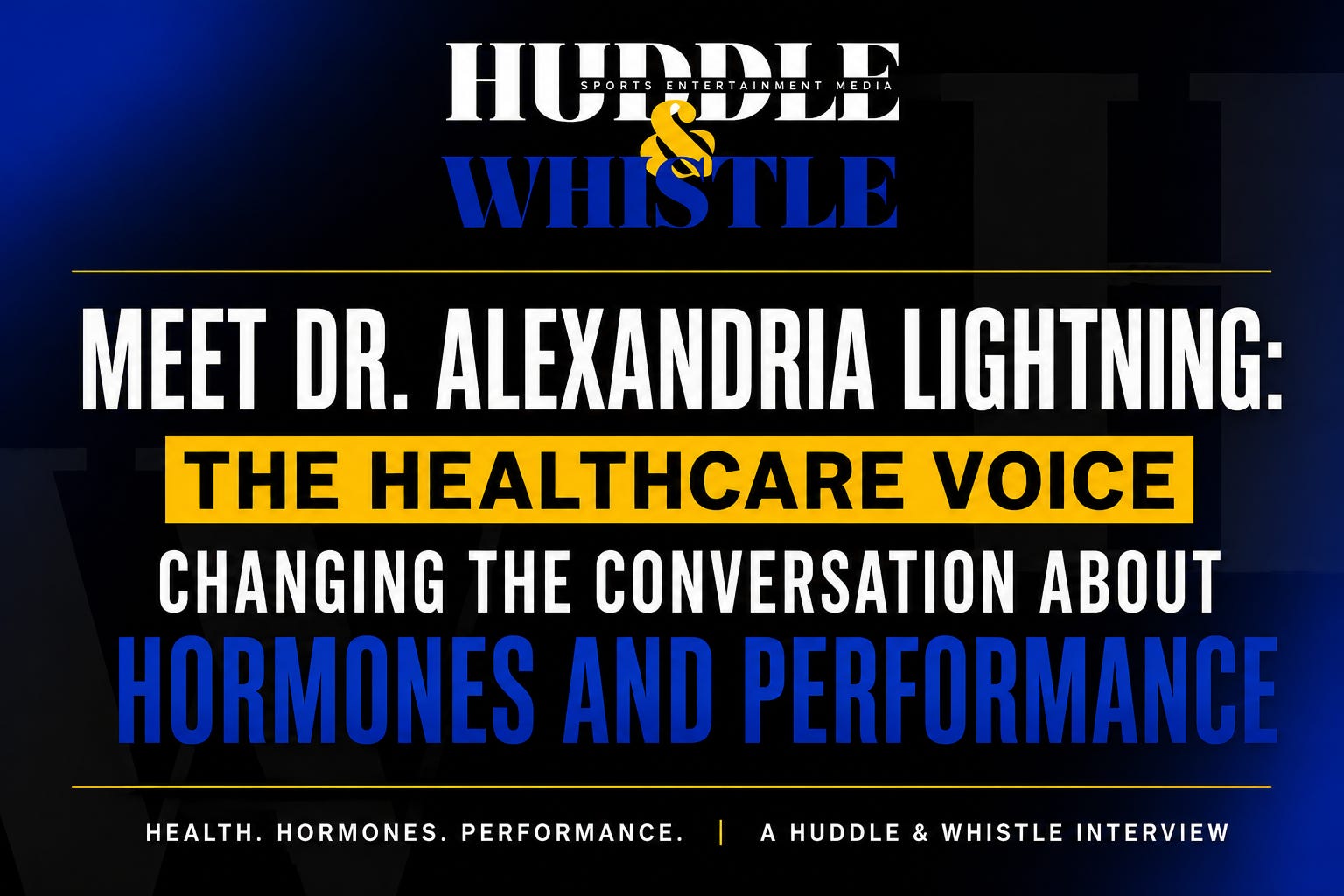
Meet Dr. Alexandria Lightning: The Healthcare Voice Asking Us to Think Differently About Hormones, Health and Performance
There are some conversations about health that begin only after something feels wrong.
Energy drops. Recovery takes longer. Sleep changes. Focus becomes harder to maintain. Athletic performance shifts. Weight changes despite familiar routines. A person may know that something feels different without understanding why.
Dr. Alexandria Lightning, DNP, APRN, FNP-BC, wants people to start asking questions earlier.
The board-certified Family Nurse Practitioner and founder of Lightning VIP joined Huddle & Whistle for a wide-ranging conversation about testosterone, hormones, stress, functional medicine, athletic performance and what it means to become a better-informed participant in your own healthcare.
For athletes and parents in particular, it is a conversation worth having.
Watch the full Huddle & Whistle interview with Dr. Alexandria Lightning on YouTube
Who Is Dr. Alexandria Lightning?
Dr. Lightning’s résumé immediately establishes her clinical background.
She earned bachelor’s and master’s degrees in nursing from Purdue University and a Doctor of Nursing Practice from South University. She is a board-certified Family Nurse Practitioner and has additional training in health coaching, hormone care and primary-care psychiatry. Her professional biography lists licenses in 11 states, although Lightning VIP’s medical services currently operate in Nevada, with non-medical health coaching available nationwide.
Her story, however, extends beyond credentials.
Dr. Lightning worked as a COVID-19 ICU provider in the Bronx during the height of the pandemic. In 2022, she faced healthcare from the other side of the relationship when she battled breast cancer herself. She has also been inducted into the Women’s Chamber of Nevada Hall of Fame.
Those experiences provide important context for the philosophy behind Lightning VIP.
What Is Lightning VIP?
Lightning VIP is Dr. Lightning’s Henderson, Nevada-based healthcare practice.
The practice currently offers primary care, hormone care, weight support and functional medicine. Its stated approach begins with understanding a patient’s symptoms, goals, history, medications, laboratory information and lifestyle before determining an appropriate care path.
That distinction becomes particularly interesting when discussing athletes.
Sports culture often concentrates on visible performance: speed, strength, vertical jump, endurance, recovery, statistics and results.
The body producing those results is considerably more complicated.
Hormones, nutrition, sleep, stress, metabolism, mental health, medications and recovery can interact in ways that are difficult to recognize by looking at performance alone.
That is where the Huddle & Whistle conversation becomes especially relevant.
Testosterone Is Not Just a Men’s Conversation
Mention testosterone and many people immediately think about men, bodybuilding or performance-enhancing drugs.
That framing leaves out much of the conversation.
Testosterone is a naturally occurring hormone present in both men and women. It has physiological functions that extend well beyond building muscle, and individual hormone concerns should be evaluated in the context of the whole person rather than reduced to a single number or symptom.
For athletes, the subject becomes even more complicated.
Questions surrounding hormones can intersect with energy, recovery, body composition, stress, sleep and performance. They can also intersect with medications and sports regulations, which makes informed medical guidance particularly important for competitive athletes.
This is one of the reasons the Huddle & Whistle discussion with Dr. Lightning matters.
It takes a subject frequently reduced to social-media sound bites and gives it room for a much larger conversation.
Athletes Need to Understand What Is Happening Inside Their Bodies
Young athletes spend enormous amounts of time learning their sport.
They study rotations, formations, footwork, mechanics and film. They attend practices, camps, tournaments and strength sessions.
Yet many athletes receive considerably less education about their own physiology.
That gap deserves attention.
The athlete who understands recovery, sleep, nutrition, stress and health has information that can help them ask better questions when something changes.
Parents need that information too.
When performance declines unexpectedly, the first instinct can be to demand more training.
Sometimes the appropriate question is different:
What is happening with the athlete?
That question opens a broader discussion about health instead of treating every performance problem as a training problem.
Cortisol and Stress Belong in the Sports Conversation Too
The modern athlete can carry an extraordinary workload.
Practice. School. Strength training. Travel. Recruiting. Social media. Academics. Family expectations. Coaches. College decisions. NIL opportunities. Injuries. Competition.
For some athletes, there is very little true downtime.
That makes stress an important component of the health and performance conversation.
Cortisol is a hormone involved in the body’s stress response. It is necessary for normal physiology, but discussions about chronic stress, sleep and recovery deserve a place alongside discussions about strength and conditioning.
An athlete can appear physically prepared while simultaneously carrying significant psychological and physiological stress.
That does not mean every difficult practice or stressful week represents a hormone disorder. It means athletes and parents benefit from understanding that performance exists within a much larger biological system.
Functional Medicine Asks a Broader Question
Lightning VIP describes its functional medicine approach as looking beyond an isolated symptom to consider interconnected factors such as hormones, metabolism, gut health, inflammation and fatigue. The practice emphasizes reviewing symptoms, history, medications, laboratory information and lifestyle context before determining next steps.
That philosophy leads to a useful question:
Instead of asking only “What symptom do we need to fix?”
What happens when we also ask “Why is this happening?”
For patients who feel that something has changed despite being told that routine testing looks normal, that question can become particularly important.
It should also come with an important qualification. Functional medicine approaches, hormone treatments and specialized testing should be evaluated individually, and broad claims about “optimal” hormone levels or treatment benefits should not replace evidence-based medical assessment. What is appropriate for one patient may be inappropriate for another.
That individualized approach is especially important when athletes are involved.
Medication, Treatment and Doping Are Not the Same Thing
Sports adds another layer to the hormone conversation.
A medication can be medically appropriate while still being regulated or prohibited by a governing sports organization.
Athletes therefore have responsibilities beyond simply asking whether a treatment is legal or prescribed.
They may also need to know:
Is this substance permitted by my governing body?
Does it require a Therapeutic Use Exemption?
Could a supplement contain an undeclared prohibited substance?
Who has verified what I am taking?
Those questions should become normal parts of athlete healthcare.
The goal is not to make athletes afraid of legitimate medical treatment. It is to make them informed enough to protect both their health and eligibility.
Dr. Lightning’s Personal Story Adds Another Dimension
There is another reason her perspective stands out.
Dr. Lightning is a breast cancer survivor.
That experience puts discussions about hormones and health into a much more serious context than performance optimization alone. Her professional biography says her 2022 breast cancer experience deepened her perspective on patient care, and she has subsequently participated publicly in conversations about healthcare providers navigating breast cancer.
It reinforces one of the central lessons from this conversation:
Healthcare decisions are personal.
Hormone treatment is not something that should be generalized from a social-media post, another athlete’s experience or someone else’s laboratory results.
Medical history matters.
Risk factors matter.
Symptoms matter.
Goals matter.
The individual matters.
Why We Wanted This Conversation on Huddle & Whistle
Huddle & Whistle was created to have conversations about sports that extend beyond the final score.
Athletes exist inside families, schools, businesses and communities. They encounter questions involving health, money, recruiting, NIL, education, mental wellness, opportunity and identity.
Understanding those issues makes the sports conversation better.
Dr. Lightning’s appearance represents exactly the type of discussion we want to continue bringing to our audience.
The episode explores testosterone and hormones, but the larger subject is education.
How well do we actually understand our bodies?
How much do athletes know about the biological systems they depend upon to perform?
When should someone seek professional guidance?
And how do we separate legitimate healthcare from trends, misinformation and shortcuts?
Those are questions worth asking long before there is a problem.
Meet Lightning VIP
For those interested in learning more about Dr. Lightning’s work, Lightning VIP provides primary care, hormone care, weight support and functional medicine from its Henderson, Nevada practice. Medical services are currently offered in Nevada, while non-medical health coaching is available nationwide.
Learn more about Dr. Alexandria Lightning and Lightning VIP
Watch the Full Huddle & Whistle Conversation
The complete conversation with Dr. Alexandria Lightning is available now through Huddle & Whistle on the Marlo Nicole Productions YouTube channel.
If you are an athlete, parent, coach or simply someone interested in understanding more about hormones and health, watch the full episode and share it with someone who should be part of the conversation.
Watch: Testosterone, Hormones & Athletic Performance with Dr. Alexandria Lightning | Huddle & Whistle
Subscribe to the Marlo Nicole Productions YouTube channel for more Huddle & Whistle interviews and original programming, and follow @huddleandwhistle for clips, conversations and original sports coverage.
Health information discussed in Huddle & Whistle content is for educational purposes and should not substitute for individualized medical advice, diagnosis or treatment from a qualified healthcare professional.
Originally published on the original source
Stay in the game
Weekly sports updates, recruiting news & athlete spotlights.
No spam, unsubscribe anytime.
Related Stories
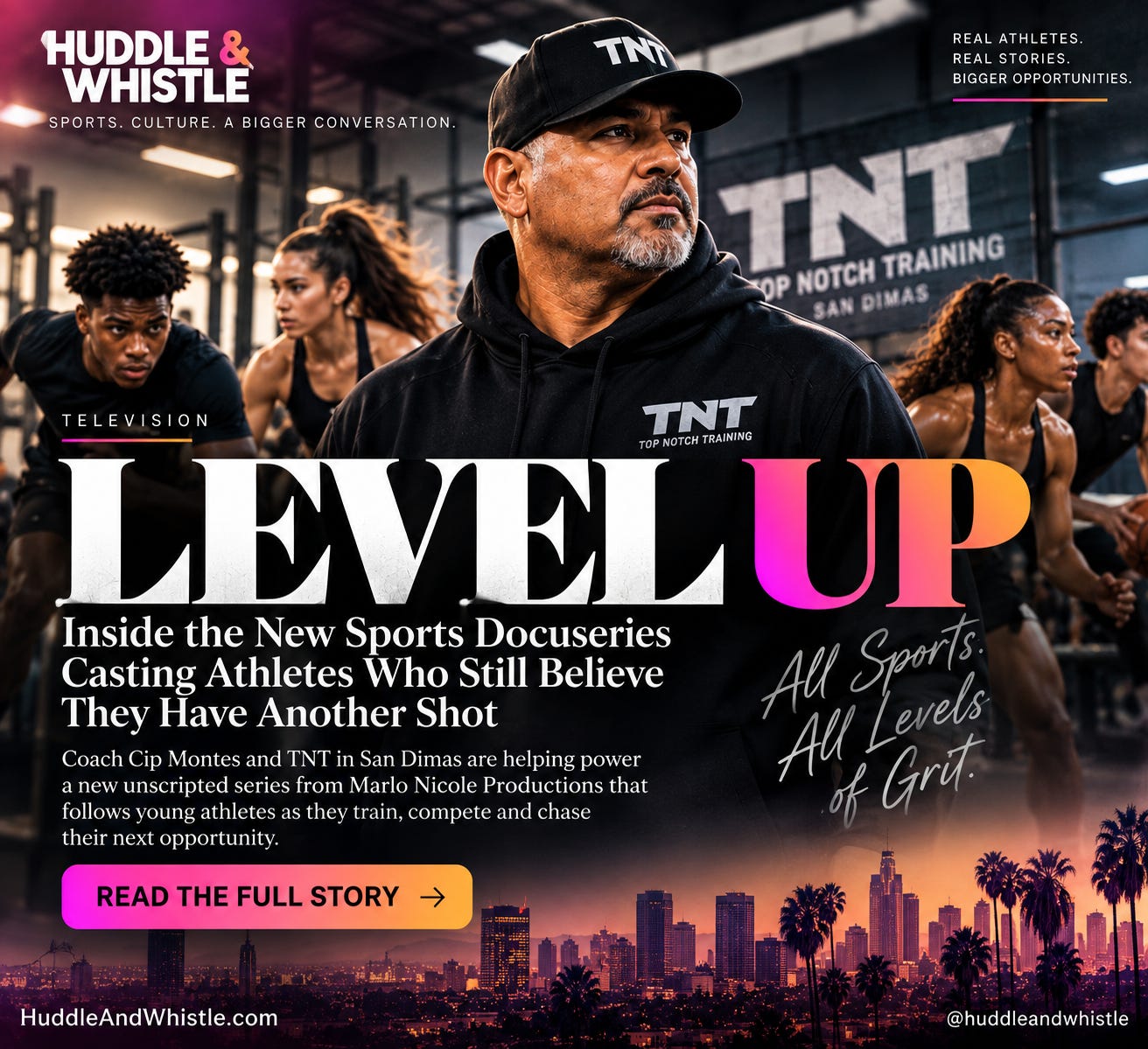
‘Level Up’ Is Looking for Athletes Who Still Believe They Have Another Shot
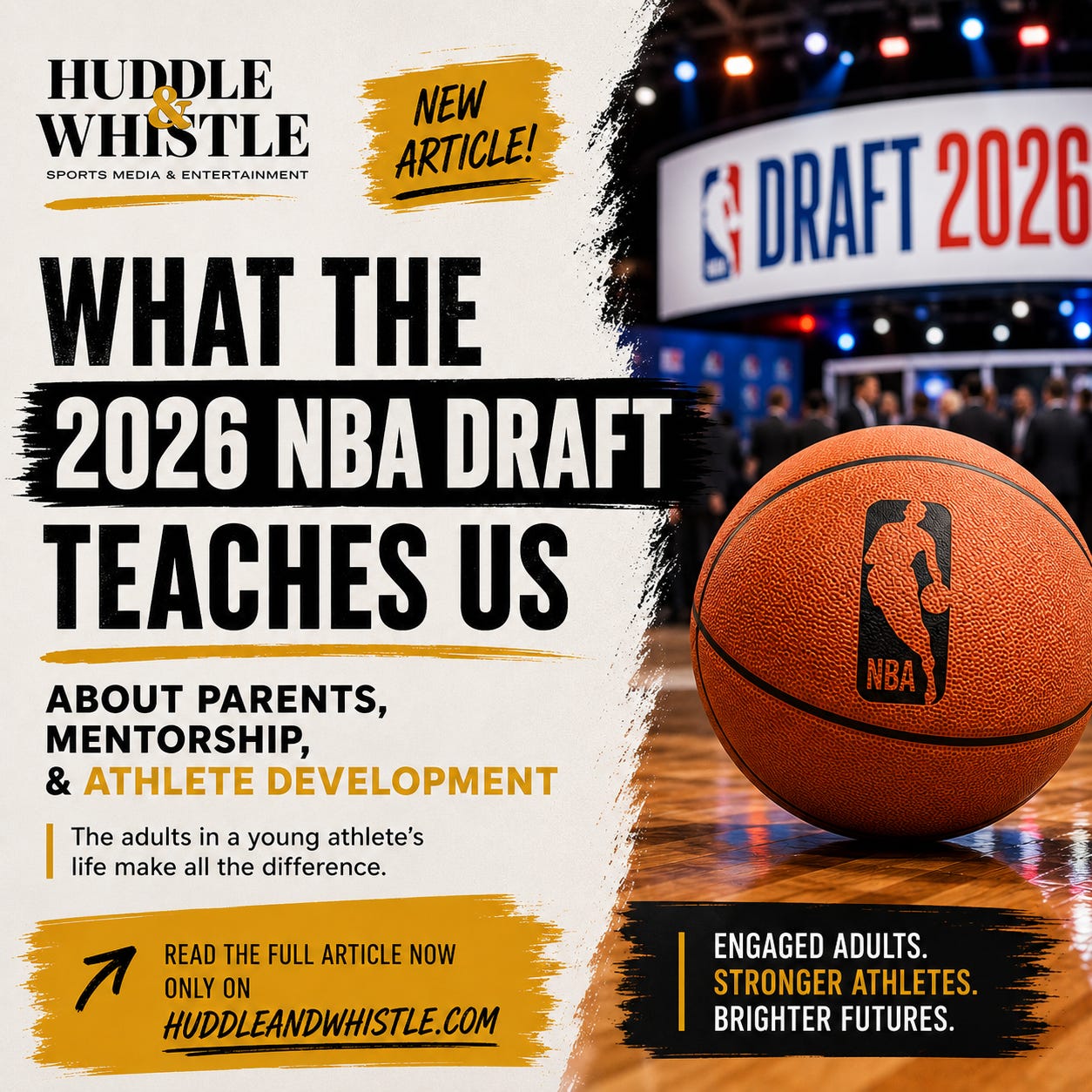
What the 2026 NBA Draft Teaches Us About Parents, Mentorship, and Athlete Development

The Playing Time Debate: What Parents, Coaches, and Athletes Need to Understand About Earning Opportunities
More From Huddle & Whistle Staff
View profile‘Level Up’ Is Looking for Athletes Who Still Believe They Have Another Shot
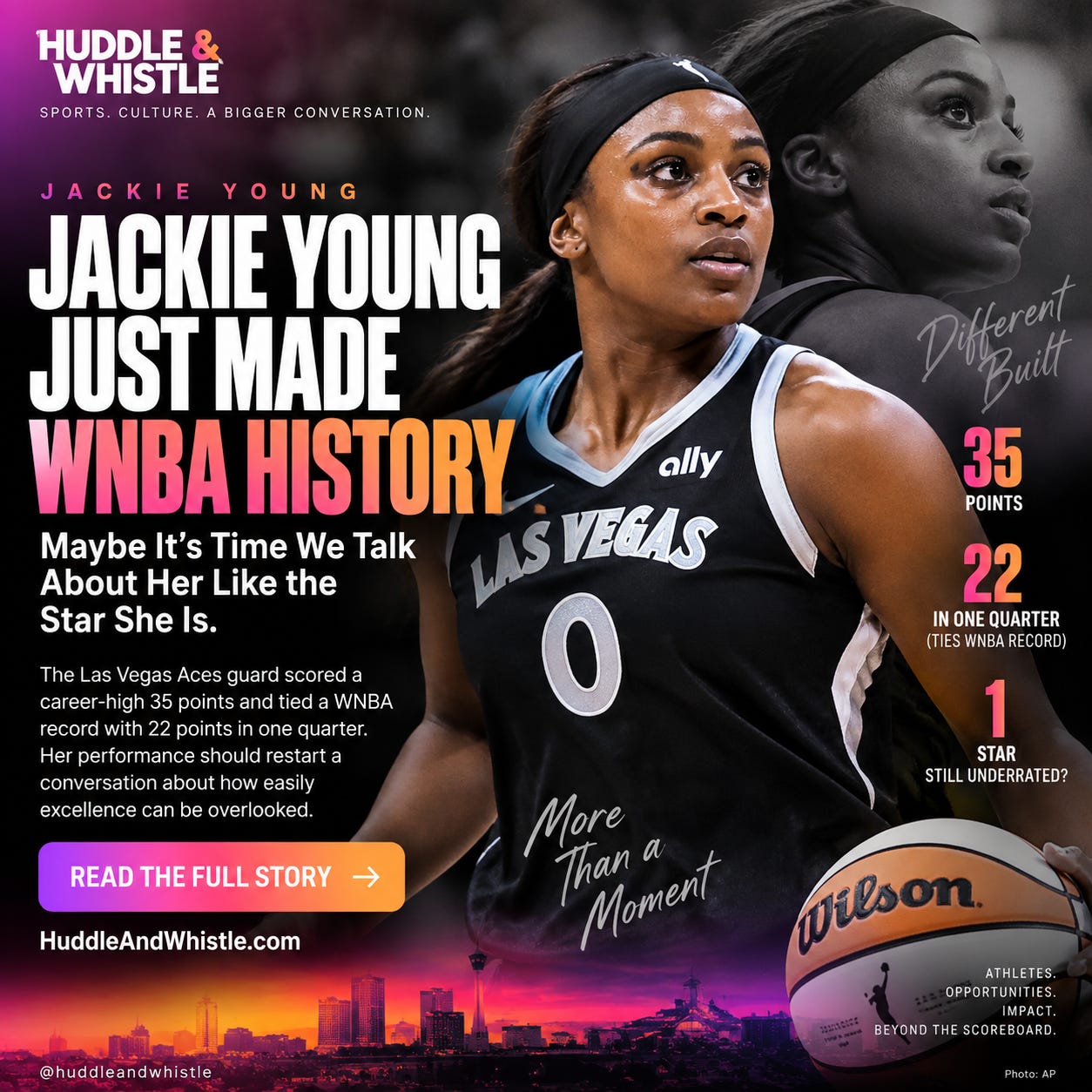
Jackie Young Just Made WNBA History. Maybe It’s Time We Talk About Her Like the Star She Is.
