Women’s Sports Are No Longer Asking for Attention, They’re Becoming the Main Event
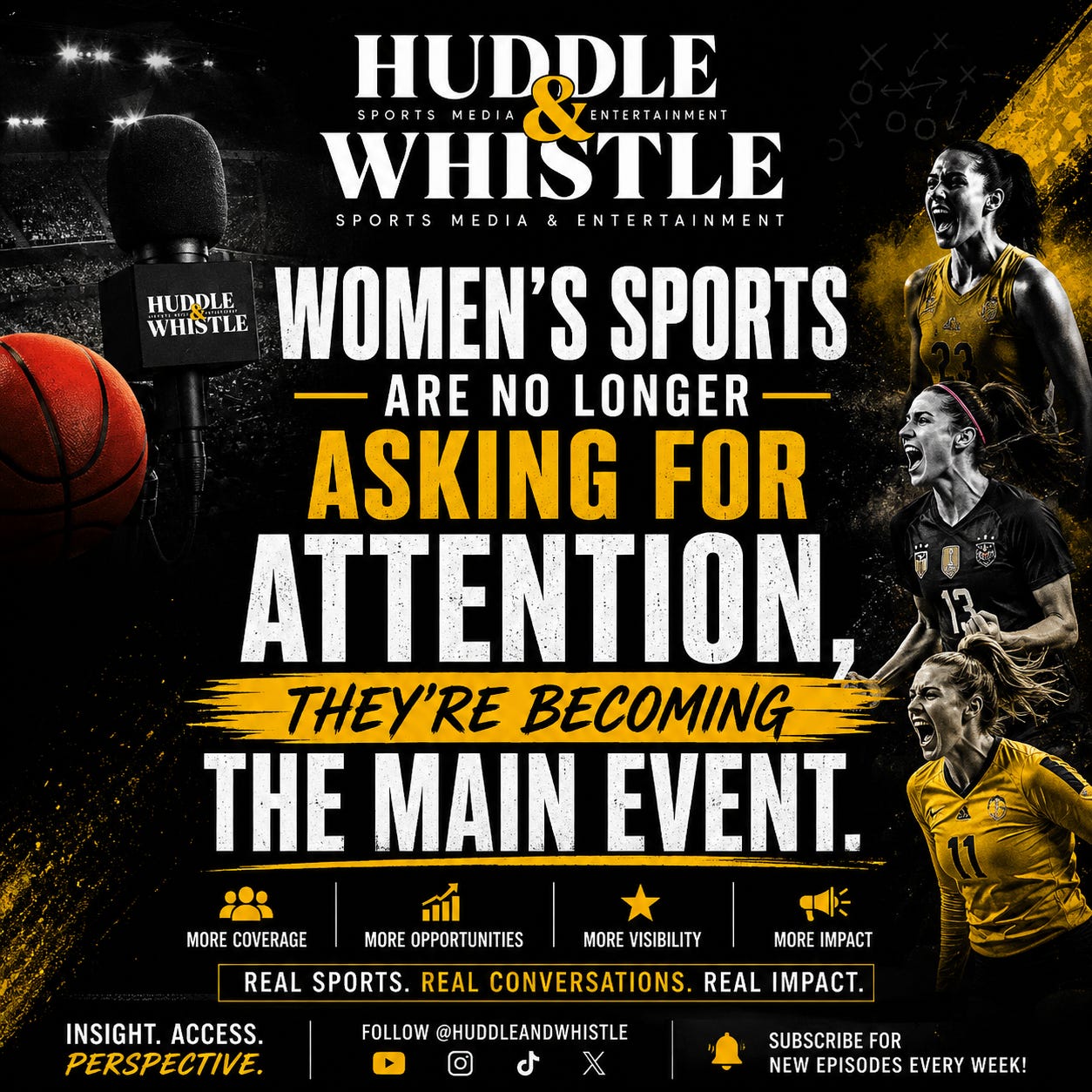
Now, they are beginning to look like one of the smartest investments in sports and entertainment.
Over the last 24 hours, the sports world continued producing evidence that the momentum behind women’s athletics is no longer temporary hype. From professional volleyball expansion to women’s basketball growth, brand partnerships, sold-out crowds, and increased media investment, the conversation has shifted from potential to profitability.
But the biggest story may not actually be happening on the court.
It is happening around the court.
The real transformation taking place in women’s sports is cultural infrastructure.
Professional leagues, media companies, sponsors, streaming platforms, and advertisers are no longer simply supporting women’s sports for appearance purposes. They are investing because audiences are showing up consistently, emotionally, and financially.
That shift has become impossible to ignore.
Recent reports surrounding the return of the WNBA to Portland highlighted how cities are beginning to build entire identities around women’s sports culture. Fans reportedly packed events celebrating the return of professional women’s basketball to the city, signaling what many executives now recognize as a long-term business opportunity rather than a niche market.
At the same time, women’s volleyball continues expanding aggressively.
ESPN Events recently announced the 2026 Shriners Children’s “Showdown at the Net” volleyball showcase featuring powerhouse programs including Stanford, Pittsburgh, Tennessee, and Texas A&M in a nationally televised primetime event at Walt Disney World Resort.
That type of visibility would have been difficult to imagine for volleyball only a few years ago.
Now it is becoming normal.
And that may be the most important sign of all.
The sports industry historically treated women’s athletics as supplemental programming rather than centerpiece entertainment. But audiences are increasingly responding differently than executives once expected.
Fans are not simply watching women’s sports because they feel obligated to support them.
They are emotionally investing.
That distinction matters.
Women’s volleyball in particular is beginning to experience a significant identity shift. Collegiate volleyball attendance continues rising nationally, professional leagues are expanding, NIL opportunities are increasing, and athletes are building stronger direct relationships with audiences through social media and independent media platforms.
The sport no longer feels hidden.
It feels culturally relevant.
That growth is creating ripple effects across recruiting, sponsorships, media coverage, podcasting, athlete branding, and even streaming strategy.
Streaming platforms themselves are paying attention because live sports remain one of the few forms of entertainment viewers consistently consume in real time. As entertainment companies continue reevaluating expensive scripted content, sports rights are becoming increasingly valuable.
Women’s sports now sit directly inside that conversation.
The growth extends beyond volleyball and basketball.
A recent report highlighted racecar driver Katherine Legge attempting the historic “Memorial Day Double,” competing in both the Indianapolis 500 and NASCAR Coca-Cola 600 on the same day while partnered with beauty brand E.L.F. Cosmetics.
The story itself was significant.
The sponsorship may have been even more revealing.
For years, female athletes were often encouraged to minimize femininity in order to fit into male-dominated sports environments. Today, brands are increasingly embracing the opposite approach, partnering with women athletes specifically because audiences connect with authenticity, visibility, and individuality.
That represents a major cultural change inside sports marketing.
Women athletes are no longer being asked to fit old sports business models.
The business model itself is evolving around them.
The media landscape is changing alongside it.
Independent sports media companies, podcasts, athlete-driven platforms, and digital-first brands are helping accelerate the visibility of women’s athletics in ways traditional media often failed to do consistently.
That includes:
volleyball coverage
athlete storytelling
NIL conversations
recruiting coverage
women’s sports business reporting
behind-the-scenes access
creator-led interviews
Audiences increasingly want direct access and authentic conversation instead of heavily filtered corporate coverage.
That is one reason platforms like Huddle & Whistle continue finding space within the modern sports media ecosystem.
The opportunity surrounding women’s sports may now be larger than the games themselves.
The real story is that audiences are proving there is room for:
more coverage
more leagues
more investment
more storytelling
more visibility
more athlete branding
more media platforms
The old argument surrounding women’s sports centered around whether audiences would care.
That question is beginning to disappear.
Now the conversation is becoming:
Who will build the future around it first?
Read more sports, entertainment, and women’s sports coverage at Huddle & Whistle
Watch interviews, press conferences, athlete features, and sports culture conversations on Huddle & Whistle YouTube
Follow Huddle & Whistle for continuing coverage surrounding volleyball, basketball, NIL, athlete branding, women’s sports, and the evolving business of sports media.
Originally published on the original source
Stay in the game
Weekly sports updates, recruiting news & athlete spotlights.
No spam, unsubscribe anytime.
Related Stories

Functional Medicine vs. Western Medicine: Why Insurance Won't Cover You

S1 E8 Testosterone, Hormones & Athletic Performance with Dr. Alexandria Lightning

S1 E4 Are Sports Parents living vicariously through their kid athletes?
More From Huddle & Whistle Staff
View profile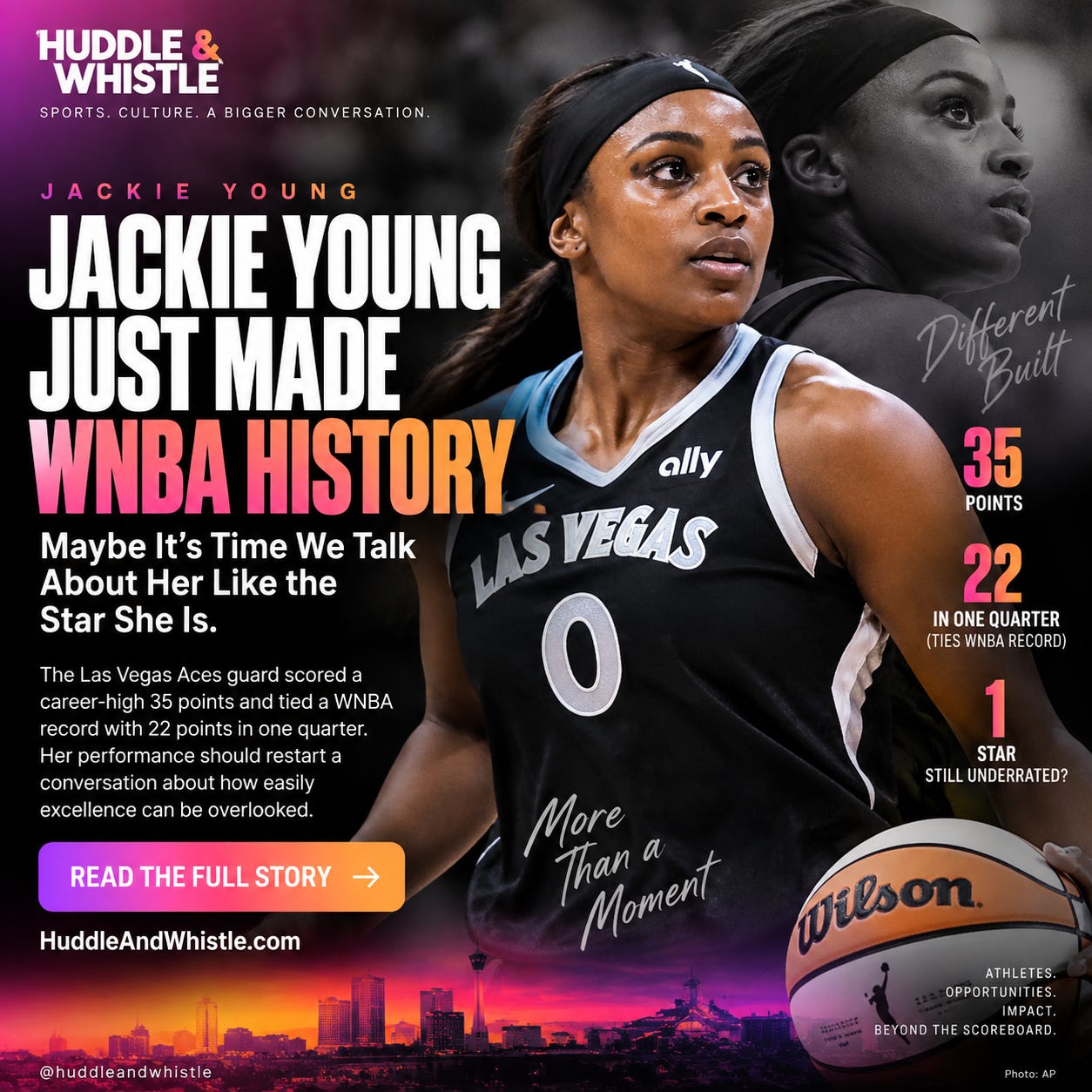
Jackie Young Just Made WNBA History. Maybe It’s Time We Talk About Her Like the Star She Is.
Meet Dr. Alexandria Lightning: The Healthcare Voice Asking Us to Think Differently About Hormones, Health and Performance